
Beef Kidney: The Overlooked Organ Meat Packed with Selenium, B12, and DAO
Of every beef organ, kidney delivers more selenium per gram than almost anything else you can eat. A single 100g serving provides 256% of your daily selenium requirement — more than most Brazil nuts — alongside over 1,100% of your daily B12. It is the organ people consistently skip. That is a mistake worth correcting.
What is beef kidney?
Beef kidney is the paired filtering organ in cattle, responsible for removing waste products from the blood, regulating electrolytes, and producing certain hormones. As food, it is a variety meat classified as offal. It is exceptionally dense in selenium, B vitamins, riboflavin, and the enzyme diamine oxidase (DAO), with a nutrient profile that competes with liver across several key markers.
The nutritional case for beef kidney
The numbers here are hard to ignore. According to USDA FoodData Central, 100g of raw beef kidney contains approximately 141mcg of selenium — 256% of the daily recommended value for adults. Selenium is a trace mineral that supports thyroid function, protects cells from oxidative damage, assists in DNA synthesis, and plays a direct role in immune regulation. Most people in modern populations fall short of adequate selenium intake, particularly those not eating seafood or organ meats regularly.
B12 is the other standout. The same 100g serving delivers roughly 27.5mcg of vitamin B12 — over 1,100% of the daily reference value. This is the bioavailable, animal-form B12 that the body uses directly, not the synthetic cyanocobalamin found in most fortified foods and cheap supplements. If you have read our piece on whole food supplements vs. synthetic vitamins, you already understand why that distinction matters for absorption and function.
Riboflavin (vitamin B2) comes in at around 218% of the daily value per 100g, making kidney one of the single richest dietary sources of this vitamin. Riboflavin drives energy production at the cellular level, supports red blood cell formation, and is essential for the metabolism of folate, B6, and niacin. Without adequate riboflavin, the rest of the B-complex underperforms.
Copper sits at around 70% of the daily value per 100g. Copper works alongside iron in red blood cell formation, supports connective tissue integrity, and is required for the enzymes that produce energy in the mitochondria. Most people are getting far more zinc than copper in their diet, which can suppress copper absorption over time. Kidney is one of the few foods that meaningfully corrects that imbalance.
Then there is ergothioneine. This rare amino acid, found in high concentrations in kidney and liver tissue, is an antioxidant the body cannot synthesise on its own. It must come from food. Research published in the British Journal of Nutrition (2023) described ergothioneine as “an underrecognised dietary micronutrient required for healthy ageing,” noting its role in reducing oxidative stress markers and its potential protective effects on cellular DNA. Outside of speciality mushrooms, beef kidney is one of the few practical whole-food sources. Most people eating a standard Western diet have virtually no ergothioneine intake at all — which is one reason ageing populations show such consistent deficiency in markers associated with this compound.
Kidney also provides a meaningful dose of CoQ10, the coenzyme central to mitochondrial energy production that we covered in detail in our beef heart article. While heart leads on CoQ10 content, kidney provides a secondary source alongside its own distinct nutrient advantages.
Finally, diamine oxidase — DAO. Beef kidney is one of the highest natural food sources of this enzyme, which breaks down dietary histamine in the gut before it enters the bloodstream. A 2019 study published in Nutrients found that oral DAO supplementation significantly improved symptoms in patients diagnosed with histamine intolerance. What makes kidney distinctive is that it provides the DAO enzyme alongside riboflavin and B6, both of which are essential cofactors that activate DAO activity. You get the enzyme and the tools it needs to work, in the same food.
Why source quality changes everything
Selenium is a soil-dependent mineral. Cattle absorb it from the pasture they graze — if the soil is depleted, the animal is too, and so is the organ tissue you eat from it. A 2023 study published in PMC examining selenium distribution across tissues in beef cattle found that organ concentrations, including kidney, reflect the animal’s selenium status directly, which is driven by grazing environment and diet quality. You cannot separate the nutrient density of the kidney from the quality of the animal’s life.
This is where New Zealand makes a concrete difference. New Zealand’s pastoral regions have naturally mineral-rich soils, and NZ cattle are required by law to graze outdoors year-round. No feedlots. No grain-finishing phases. A review comparing grass-fed and grain-fed beef found that grass-fed animals contained significantly higher selenium concentrations — some analyses showing levels approximately six times higher than grain-finished equivalents. The gap is not marginal.
The same logic applies to the fat-soluble vitamins and fatty acids within kidney tissue. Grass-fed animals grazing across a diverse pasture produce organs with higher omega-3 content and richer fat-soluble nutrient profiles than animals fed narrow-spectrum grain diets. The variety of the animal’s food becomes the variety of your nutrition.
New Zealand also prohibits synthetic growth hormones in beef cattle outright — a legal requirement, not a voluntary marketing claim. Most beef-producing countries, including the United States, permit their use. For us, that matters especially with organ meat. The kidney is a filtering organ. Its job is to process what the animal encounters over its lifetime. Choosing kidney from an animal that was never exposed to synthetic hormones or routine antibiotics is not a premium preference. It is the baseline we should expect.
When you are comparing organ supplement brands, the sourcing question is not a secondary detail. It determines the nutrient density of what is inside the capsule.
Common questions about beef kidney
Is beef kidney actually good for you?
Yes — and the evidence is specific, not vague. Beef kidney from pasture-raised, grass-fed cattle is one of the most selenium-dense whole foods available, a major whole-food source of bioavailable B12, and one of the only dietary sources of both the DAO enzyme and ergothioneine. The nutrient density per gram is exceptional. Conventionally sourced kidney from grain-finished feedlot cattle will still provide protein and some B vitamins, but the micronutrient profile is meaningfully lower, particularly for selenium and fat-soluble nutrients.
What does DAO from beef kidney actually do?
Diamine oxidase (DAO) is an enzyme produced primarily in the intestinal lining that degrades histamine from food before it enters the bloodstream. When DAO activity is low — due to gut lining damage, certain medications, genetic variants, or chronic inflammation — dietary histamine from aged cheeses, fermented foods, wine, and some fish accumulates and triggers a range of inflammatory symptoms including headaches, bloating, skin flushing, and fatigue. Eating kidney provides DAO directly alongside riboflavin and B6, which are the cofactors the enzyme needs to function. The enzyme acts in the gut, before histamine is absorbed.
How does beef kidney compare to beef liver?
They are complementary, not interchangeable. Liver leads on retinol (vitamin A), copper, and folate — see our full breakdown in the beef liver benefits article. Kidney’s advantages are selenium concentration, DAO enzyme content, and ergothioneine. Neither one covers everything the other covers. In a well-formulated organ complex, you want both. Choosing liver and ignoring kidney means leaving specific nutrients out of the picture.
Can I get real benefits from a beef kidney supplement?
Yes, if the product is formulated correctly. The variables that determine whether a kidney supplement actually works: it should be freeze-dried rather than heat-dried (high temperatures destroy enzymatic activity, including DAO); it should come from pasture-raised animals (for mineral density); and it should list the milligram dose of whole desiccated kidney clearly, with no undisclosed fillers, flow agents, or bulking agents that dilute the effective dose. If a brand cannot or will not tell you where their kidney comes from, that absence of information is itself informative. Our guide on how to choose a beef organ supplement walks through what to look for in detail.
How we approach this at Field & Form
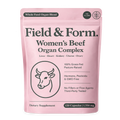
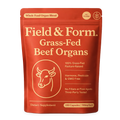
Our Beef Organ Complex includes kidney alongside liver, heart, pancreas, and spleen. The kidney inclusion was a deliberate decision based on what we could not find elsewhere in the market: a whole-organ product where every ingredient is clearly sourced, properly dosed, and free of the flow agents that most supplement manufacturers use as a matter of course.
Our kidney comes from the same New Zealand cattle as every other organ in our complex. Grass-fed, pasture-raised, year-round outdoor grazing, no synthetic growth hormones, third-party tested. We freeze-dry at low temperature specifically to preserve enzymatic activity in the final capsule. Heat-processing destroys the very enzymes — including DAO — that make kidney worth including in the first place. The manufacturing method is not a footnote. It determines what you are actually getting.
We built Field & Form because we could not find a supplement that met this standard. If you are taking our organ complex, you are already getting kidney. If you want a higher dose of kidney specifically, we offer it as a standalone. Either way, the sourcing is the same.
The kidney was not dropped from the ancestral diet because it stopped being useful. We stopped eating it because modern food systems made it inconvenient and unfamiliar. The nutrients have not changed. The case for eating it — or supplementing with it — is as strong as it has ever been, and the sourcing is the only thing that determines whether you are actually getting what the research supports.
Last updated: 26 March 2026
Ready to feel the difference?
Five grass-fed organs. Freeze-dried. No fillers. 30-day supply.
Shop Beef Organ Complex