
Beef Spleen: The Organ Meat With Five Times More Iron Than Beef Liver
Beef spleen contains around 31 milligrams of iron per 100 grams of raw tissue — roughly five times the iron content of beef liver, and one of the highest concentrations of dietary iron in any whole food. Most people who are looking to address iron deficiency or support energy reach for liver. Spleen deserves the same attention.
What is beef spleen?
Beef spleen is the splenic organ from grass-fed cattle, consumed as a whole food or taken as a freeze-dried supplement. It is a large, highly vascular organ that filters blood, recycles red blood cells, and stores white blood cells and platelets — making it extraordinarily rich in iron, protein, and specific immune-active compounds not found in significant quantities in any other food.
The nutritional case for beef spleen
The iron figures are striking enough to anchor the entire argument. According to USDA FoodData Central (FDC ID 169454), raw beef spleen provides approximately 31.2mg of iron per 100 grams — representing over 550% of the adult recommended daily intake. For context, USDA data shows raw beef liver at around 6.2mg per 100g. That is a five-to-one ratio. When cooked, spleen concentrates further: braised beef spleen provides approximately 39mg of iron per 100g of cooked weight.
The critical distinction is the form of that iron. Approximately 73% of beef spleen's iron is heme iron — the form found only in animal foods, with an absorption rate of 15 to 35% depending on the individual's iron status. Non-heme iron from plant sources absorbs at 2 to 20%, and absorption is inhibited by phytates, oxalates, and calcium. The practical difference: a person eating 80g of beef spleen is taking in a level of bioavailable iron that would require consuming large quantities of most plant sources to approximate, without the absorption advantages.
Beyond iron, the nutritional picture broadens. USDA data shows raw beef spleen provides around 18.3 grams of protein per 100g, with selenium at approximately 91mcg (over 130% of the adult daily intake). Selenium is a cofactor for glutathione peroxidase — one of the body's primary antioxidant enzymes — and supports thyroid hormone conversion. Zinc comes in at around 2.79mg per 100g (roughly 35% of daily needs). These figures matter in the same way they do for beef kidney: each mineral contributes to overlapping systems, and the combination in a single whole food source is what makes organ meats categorically different from muscle meat.
One compound worth highlighting separately is vitamin C. Beef spleen contains measurable levels of vitamin C — which is unusual for an animal food and directly relevant to iron absorption. Vitamin C increases non-heme iron absorption and supports heme iron conversion. The fact that spleen carries its own vitamin C alongside its iron content is nutritionally coherent in a way that no isolated supplement can replicate.
Spleen also contains two bioactive compounds specific to splenic tissue: tuftsin and splenopentin. Tuftsin is a tetrapeptide produced naturally in the spleen that activates macrophages — the immune cells responsible for identifying and eliminating pathogens. A 2022 study published in Frontiers in Molecular Biosciences found that tuftsin binds directly to ACE2 and NRP1 receptors, the same entry points used by viruses including SARS-CoV-2. Splenopentin is a five-amino-acid peptide that supports natural killer cell activity. Both compounds are found in highest concentration in splenic tissue, which is why spleen supplements have attracted research interest as immune-supporting agents separate from their mineral content.
It is worth being precise about what this research means. Most studies on tuftsin and splenopentin use isolated peptides in animal models or cell cultures, not whole food consumption in humans. The clinical story is compelling but still emerging. What is established beyond any reasonable doubt is the iron and mineral case — the nutritional data is among the strongest for any food in the category.
Why source quality changes everything
The spleen is a highly vascular organ. It filters blood continuously throughout the animal's life. This means what the animal ate, how it was raised, and what it was exposed to is directly reflected in the tissue in a way that is more concentrated than in muscle meat.
For iron content, the grazing profile of the animal matters less than for fat-soluble nutrients like retinol or vitamin E — iron is iron. But for the fat-soluble vitamin and omega-3 profile, the differences between pasture-raised and grain-finished animals are significant. Research published in Food Science of Animal Resources (2022, PMC8728510) found grass-fed beef contains two to six times more omega-3 fatty acids than grain-fed. A systematic review found alpha-tocopherol (vitamin E) is approximately three times higher in grass-fed tissue. These differences matter because they affect the full nutritional package you receive alongside the iron.
For splenic tissue specifically, a 2014 study published in PLOS One examined transcriptomic differences in spleen tissue between grass-fed and grain-fed Angus cattle and found differential gene expression patterns in metabolic and immune-related pathways. This suggests that beyond measurable nutrient content, the functional profile of the tissue itself differs between production systems.
New Zealand's farming context is relevant here for the same reasons it matters for every organ we source. NZ cattle graze on pasture year-round. There are no feedlots. The animals are not finished on grain rations. When we source splenic tissue, we are working with material from animals whose entire life reflected the nutritional advantages of continuous pasture grazing — not just the final weeks before processing.
Processing matters too, and perhaps especially for spleen. The immune-active compounds — tuftsin and splenopentin — are peptides, which means they are sensitive to heat and processing conditions. Freeze-drying at low temperatures is the only method that preserves them in meaningful quantities. High-heat desiccation destroys them. If you are looking at a spleen supplement specifically for the immune case, the processing method is not a secondary detail.
Common questions about beef spleen
How much iron is in beef spleen compared to other foods?
Raw beef spleen contains approximately 31mg of iron per 100g, according to USDA FoodData Central — roughly five times more than beef liver (6.2mg/100g) and around ten times more than typical beef muscle meat. Approximately 73% is heme iron, which absorbs at 15 to 35% — significantly better than non-heme iron in plant foods. This makes beef spleen one of the most concentrated and bioavailable dietary sources of iron in the human food supply.
What is tuftsin and why does it matter?
Tuftsin is a tetrapeptide produced naturally in the spleen that stimulates macrophage activity — the immune cells responsible for identifying, engulfing, and eliminating pathogens and cellular debris. Research suggests tuftsin also interacts with key receptor binding sites relevant to viral entry. Spleen tissue contains the highest natural concentration of tuftsin of any food, and because it is a peptide, it is only preserved through low-temperature processing like freeze-drying.
Can I eat beef spleen as a food or does it only come as a supplement?
Beef spleen can be eaten as a whole food. It is used in traditional preparations across Jewish, Middle Eastern, Italian, and British cuisines — sometimes stuffed and roasted (called "milza" in Sicilian cooking), or slow-cooked in stews with other offal. The flavour is milder than kidney but more mineral than liver. In supplement form, freeze-dried spleen capsules offer a practical option for those who want the nutritional benefits without preparing the organ fresh. Source quality applies equally to both forms.
Is beef spleen good for iron deficiency?
Beef spleen is among the best dietary sources of heme iron available. The combination of exceptionally high iron concentration and high heme iron percentage makes it more efficient per gram than most other foods at raising iron status. Some practitioners working with iron-deficiency anaemia recommend organ meats, including spleen, as part of dietary support. Anyone with a diagnosed deficiency should work with their doctor to monitor levels, as iron can accumulate at high intakes.
Are there any risks with beef spleen?
The primary safety considerations are sourcing-related. Splenic tissue from animals with a disease history or from high-risk regions for BSE (bovine spongiform encephalopathy) carries contamination concerns that make traceability non-negotiable. This is not a theoretical risk — it is the reason sourcing from a country with rigorous disease surveillance matters. New Zealand has maintained BSE-free status and operates under strict animal health monitoring. Separately, because spleen is exceptionally iron-rich, people with haemochromatosis (genetic iron overload) should exercise caution.
How we approach this at Field & Form
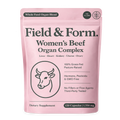
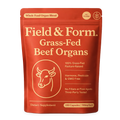
We included beef spleen in our Organ Complex because the iron argument alone is hard to dismiss. Most people who come to organ supplements are looking for energy support, and energy is often an iron story. Muscle meat does not address that the way organ meats can — and within organs, spleen is in a category of its own for iron density.
But we spent as much time on the processing question for spleen as we did on sourcing. The immune-active compounds — tuftsin, splenopentin — are why spleen is different from simply taking an iron supplement. If those peptides are destroyed by heat during processing, the product becomes a more expensive iron source than it needs to be. We freeze-dry at temperatures that preserve them. We test to verify. We use third-party testing on every batch to confirm what's on the label is what's in the capsule.
Spleen sits alongside beef liver, beef heart, beef kidney, and beef pancreas in our Organ Complex — each organ contributing a different emphasis. Liver anchors the B12 and retinol argument. Heart brings CoQ10 and taurine. Kidney brings selenium and DAO. Pancreas adds digestive enzymes and phosphorus. Spleen is where the iron case lives. Together they replicate what a nose-to-tail diet actually delivers: the full complement of what each organ does best, not just the one or two nutrients that muscle meat happens to be marketed on.
New Zealand's pasture-raised standard is the baseline for everything we source. For splenic tissue specifically, it means material from animals whose blood quality — and therefore the quality of the blood-filtering organ itself — was shaped by a lifetime on fresh pasture rather than a feedlot finishing programme. That difference shows in the tissue. It is not a marketing claim layered over a commodity product. It is the farming reality that makes our sourcing decisions make sense.
If you want to understand what makes a well-formulated organ supplement worth choosing over a generic alternative, the full buying guide is here.
Beef spleen is the least famous organ in a category that already doesn't get enough credit. The iron data makes the case clearly. The immune science is promising and moving forward. The sourcing and processing questions are the same ones that apply to every organ — and they matter just as much here.
Last updated: 2 April 2026
Ready to feel the difference?
Five grass-fed organs. Freeze-dried. No fillers. 30-day supply.
Shop Beef Organ Complex