
Retinol vs Beta-Carotene: Why the Form of Vitamin A Matters More Than the Amount
Up to 45% of people carry a gene variant that significantly reduces their ability to convert beta-carotene into vitamin A. Most of them have no idea. So when nutrition advice tells you to eat more carrots for vitamin A, it's giving you half an answer at best — and for a large portion of the population, it's functionally useless advice.
Vitamin A is not a single compound. It's a category. The form you eat determines whether your body can actually use it, and the gap between the best and worst sources is enormous.
What is retinol?
Retinol is preformed vitamin A — the active form the body can use immediately, without conversion. It comes exclusively from animal foods: liver, kidney, egg yolks, and dairy. Beta-carotene, the orange pigment found in carrots, sweet potato, and leafy greens, is a provitamin A carotenoid that must be converted into retinol by an enzyme in the gut before it becomes biologically active. These two forms are not interchangeable, and treating them as equivalent is where the confusion starts.
The conversion problem the nutrition world mostly ignores
Here is the core issue: the conversion of beta-carotene to retinol is inefficient, highly variable, and in some people barely happens at all.
The Food and Nutrition Board revised its estimated conversion ratio for dietary beta-carotene to vitamin A to 12:1 by weight, meaning you need to consume 12 grams of beta-carotene to produce 1 gram of retinol. But that's the average. Research published in the American Journal of Clinical Nutrition shows individual conversion ratios ranging from 3.6:1 to 28:1, depending on the person, the food matrix, fat content of the meal, and gut health.
Absorption rates make this even starker. Preformed retinol from animal sources is absorbed at 75-100% efficiency. Beta-carotene from food is absorbed at somewhere between 3% and 90%, depending on individual factors. That 3% lower bound is not a typo. For some people, eating plant-based vitamin A sources produces almost no usable vitamin A at all.
The reason is genetics. An enzyme called beta-carotene oxygenase 1, encoded by the BCO1 gene, is responsible for cleaving beta-carotene into retinal — the first step toward retinol. Research shows that two common single nucleotide polymorphisms in BCO1 (R267S and A379V, with variant allele frequencies of 42% and 24% respectively) reduce the enzyme's catalytic activity by up to 57%. When someone carries both variants, their conversion efficiency can be nearly 70% lower than normal. Roughly 45% of the population carries at least one of these variants.
This is not fringe science. The research has been published in peer-reviewed journals including the American Journal of Clinical Nutrition, the Journal of Lipid Research, and PLOS One. It means that a significant portion of people eating a plant-dominant diet, and relying on beta-carotene as their primary vitamin A source, may be chronically under-supplied — with no clear symptoms until the deficiency becomes significant.
Why animal-sourced retinol changes the equation
When you eat beef liver, there is no conversion step. The retinol is already in its active form, and your body absorbs it directly. According to USDA FoodData Central, 100g of beef liver contains approximately 4,968 mcg of retinol activity equivalents — around five times the recommended daily intake in a single serving. Four ounces of grass-finished liver delivers roughly 5,590 mcg, approximately six times the RDI.
This is why traditional cultures across every continent made organ meats — particularly liver — a prized food, especially for pregnant women, children, and anyone recovering from illness. They didn't have bioavailability research. They had centuries of observed outcomes.
If you want to understand more about why we consider beef liver the most nutrient-dense food on the planet, we've covered the full picture in our deep dive on beef liver.
Why source quality changes everything
Not all beef liver is equivalent. The vitamin A content of liver varies dramatically depending on how the animal was raised, and specifically what it ate.
Cattle raised on pasture graze on grass and wild plants that are rich in beta-carotene. Unlike humans, cattle are highly efficient converters of beta-carotene to retinol, and their liver accumulates the result. Research on herbivorous ungulates shows that grass-fed steers incorporate 5-7 times higher amounts of beta-carotene, total carotenoids, and retinol in liver and muscle tissue compared to grain-fed animals. According to USDA data, grass-finished beef liver contains 459% more vitamin A than liver from feedlot-raised cattle.
Grain feeding changes this. When cattle move off pasture onto a grain-based diet, the supply of dietary beta-carotene drops sharply, and liver retinol levels follow. A supplement may come from the same species, but the nutrient content is not the same animal.
In New Zealand, cattle graze outdoors on pasture for the full year. The climate and farming model here make year-round grass feeding the norm, not a premium tier. When we source our organs from New Zealand farms, we are sourcing from animals that have had consistent access to the diet that makes organ meats worth eating in the first place.
Common questions about retinol vs beta-carotene
Can you get enough vitamin A from plant foods?
For people with normal BCO1 function and a varied diet with adequate fat, it is possible to maintain vitamin A status from plant sources. But the margin for error is narrow, and roughly 45% of people have genetic variants that meaningfully reduce conversion efficiency. For those individuals, relying primarily on beta-carotene from plants creates a real risk of suboptimal vitamin A status, even when vegetable intake looks excellent on paper.
Is retinol from supplements the same as retinol from food?
Isolated retinol palmitate or retinyl acetate in supplements delivers the same active compound, but without the cofactors present in whole food. Liver provides retinol alongside B12, copper, choline, and other nutrients that work together in the body. Isolated supplements are a clinical tool for deficiency; whole-food sources are a better long-term foundation.
Can you take too much vitamin A from food?
Vitamin A toxicity from food is rare at normal eating patterns. The Tolerable Upper Intake Level for adults is 3,000 mcg RAE per day. Eating liver 2-3 times per week, or using a whole-food liver supplement at standard doses, keeps intake comfortably within the safe range for most healthy adults. Pregnant women should follow specific guidance, as very high retinol intake in the first trimester carries risk — speak with a healthcare provider if you are pregnant or planning pregnancy.
Why does grass-fed matter for vitamin A content?
Because the retinol content of liver directly reflects what the animal ate. Grass-fed cattle have consistent access to carotenoid-rich pasture, which translates to higher vitamin A accumulation in their organs. Feedlot cattle on grain diets have substantially lower liver retinol content. The sourcing claim on the label changes the nutritional reality of what is inside the capsule.
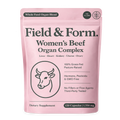
How we approach this at Field & Form
When we were building Field & Form, the vitamin A question was one of the first things we dug into seriously. The idea that plant foods could reliably supply active vitamin A to everyone was not holding up under scrutiny. The BCO1 research, the variable conversion rates, the difference in absorption efficiency — it became clear that for people who want to be confident they are meeting their vitamin A needs, preformed retinol from animal sources is the more reliable route.
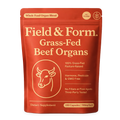
We source our beef organs exclusively from New Zealand pasture-raised cattle. The reason is not marketing language — it is a direct consequence of what the research shows about grass-fed versus grain-fed liver nutrient content. Vitamin A content is measurably higher in animals raised on pasture, and New Zealand's year-round outdoor farming system produces as consistent a result as you will find.
Our liver capsules deliver whole dried liver, not isolated retinol. That distinction matters because liver as a food brings cofactors alongside the vitamin A: copper for metabolism, choline for liver function, B12 for the methylation pathways vitamin A depends on. We want to give the body the whole context, not one extracted variable.
We started Field & Form because we couldn't find a supplement that met this standard — grass-fed sourcing confirmed, whole-food formulation, no fillers. If you want to understand how we think about what goes into our products, our piece on whole-food versus synthetic supplements covers the broader philosophy.
The form of vitamin A you eat determines whether your body can use it. For roughly half the population, that distinction is not academic — it is the difference between adequate status and chronic deficiency, quietly running in the background with no obvious symptoms until something breaks.
Last updated: 2 April 2026
Ready to feel the difference?
Five grass-fed organs. Freeze-dried. No fillers. 30-day supply.
Shop Beef Organ Complex