
B12 From Whole Food vs Synthetic Supplements: Why the Form You Choose Matters
Most people associate B12 deficiency with vegans. That framing misses the real problem. B12 deficiency is widespread in people who eat meat regularly, who take a daily multivitamin, and who have no obvious reason to be low. The issue isn't usually how much B12 people consume. It's what form they're consuming, and whether their body can actually do anything with it.
What B12 actually does
Vitamin B12 is essential for DNA synthesis, red blood cell formation, and the maintenance of the myelin sheath that insulates nerve fibres. Without adequate B12, nerves degrade. Red blood cells become enlarged and dysfunctional, unable to carry oxygen efficiently. Cognitive function suffers. Energy production falters at the cellular level.
None of this is controversial. What's less widely understood is that B12 exists in several structurally distinct forms, and those forms behave very differently inside the body. The form that ends up in most supplements is not the form your body uses. That gap explains a lot of the confusion around why people can take B12 supplements for years and still test low, or why they supplement adequately on paper and still experience symptoms associated with deficiency.
The four forms of B12
B12 comes in four main forms: cyanocobalamin, hydroxycobalamin, methylcobalamin, and adenosylcobalamin. The last two are the active coenzyme forms, meaning they are the versions that human cells can directly use without further conversion. Methylcobalamin is the form found predominantly in blood and nervous tissue. Adenosylcobalamin is concentrated in mitochondria, where it supports energy metabolism.
Cyanocobalamin is the form used in most synthetic supplements because it's cheap to manufacture, chemically stable, and has a long shelf life. It is not found in food in meaningful amounts. To become biologically active, cyanocobalamin must be stripped of its cyanide molecule and then converted through two enzymatic steps into either methylcobalamin or adenosylcobalamin. This conversion works well in healthy adults with normal methylation function. It works less well in a substantial portion of the population.
Research suggests that variants in the MTHFR gene, which is involved in the methylation pathway, affect somewhere between 30 and 60 percent of people to varying degrees. In individuals with reduced methylation capacity, the conversion of cyanocobalamin to active B12 is impaired. They may be taking a supplement that looks adequate on a label and still failing to raise functional B12 levels in their cells.
Hydroxycobalamin, a naturally occurring form found in some foods and used in clinical B12 injections, sits between cyanocobalamin and the active forms. It converts more readily than cyanocobalamin and is better retained in tissue. It's a step in the right direction but still not what the body ultimately needs.
Why whole food B12 is structurally different
B12 in animal foods exists almost entirely as methylcobalamin and adenosylcobalamin, bound to protein. When you eat beef liver, kidney, or heart, you're consuming B12 in the exact coenzyme forms your cells use. There's no conversion step required. The B12 arrives in the form it needs to be in.
Beyond the form itself, whole food B12 comes embedded in a nutritional matrix that supports its absorption. B12 absorption is a complex, multi-step process. In the stomach, B12 binds to haptocorrin (a protein in saliva), which protects it as it travels through the acidic gastric environment. In the small intestine, pancreatic enzymes release B12 from haptocorrin, and it then binds to intrinsic factor, a glycoprotein produced by parietal cells in the stomach lining. Only the B12-intrinsic factor complex can bind to specific receptors in the ileum and be absorbed into the bloodstream.
This pathway evolved around food-based B12. The co-factors, the timing, the protein binding, the enzymatic sequence, all of it is calibrated to how B12 appears in animal tissue. Synthetic B12 in a tablet disrupts part of this process. High-dose cyanocobalamin supplements partly bypass intrinsic factor through passive diffusion, but this route is inefficient, absorbing only around 1 to 2 percent of the dose compared to the active receptor-mediated pathway that handles food-based B12.
The organ meat advantage
Liver is the most concentrated food source of B12 on earth. A 100g serving of beef liver contains approximately 70 to 90mcg of B12, against a recommended daily intake of 2.4mcg. That figure seems almost absurdly high, but it reflects how the liver functions as a nutrient storage organ. Animals, including humans, store B12 in the liver specifically because the body treats it as a reserve for periods of dietary scarcity.
Kidney provides around 20 to 30mcg per 100g. Heart contains approximately 10mcg. Each organ brings a different B12 density, and each contributes to a total intake that far exceeds what supplements typically deliver, in a form the body handles more efficiently.
New Zealand's pasture-raised beef system matters here for the same reason it matters for minerals like iron and selenium: the nutritional profile of the organ reflects what the animal ate and how it lived. Grass-fed cattle on diverse pastures accumulate higher levels of B vitamins, including B12, compared to animals on grain-heavy feedlot diets. The feed directly influences the nutrient density of the tissue. When we source organs for our complex, we're sourcing from the New Zealand system not as a marketing position but because the baseline nutritional output is measurably better.
New Zealand has not permitted growth hormones in beef cattle since well before this became a selling point elsewhere. Outdoor grazing 365 days a year isn't a premium option here, it's the standard. Those conditions produce animals whose organs are more nutritionally dense from the start.
Who is most at risk from synthetic B12
The groups most likely to struggle with cyanocobalamin conversion are not a small minority. They include people with MTHFR variants (a large share of the general population), older adults whose intrinsic factor production declines with age, people with atrophic gastritis or who take proton pump inhibitors (which reduce stomach acid needed for B12 release from food), and people with any degree of gut inflammation or malabsorption. Heavy alcohol use depletes B12. Metformin, commonly prescribed for type 2 diabetes, is well-documented to reduce B12 absorption over time.
None of these groups are rare. Together they represent a substantial portion of adults who might be taking a standard B12 supplement and receiving far less functional benefit than the dose on the label would suggest.
The clinical literature on B12 deficiency consistently finds that serum B12 levels, the standard blood test, are a poor indicator of functional B12 status. People can have normal or high serum B12 and still show markers of functional deficiency, particularly when they're supplementing with cyanocobalamin. The more meaningful markers, methylmalonic acid and homocysteine, reflect whether B12 is actually working at the cellular level. These tests are rarely ordered in standard care.
Common questions about B12 forms and absorption
Why do most B12 supplements use cyanocobalamin if it's less effective?
Cost and stability. Cyanocobalamin is significantly cheaper to produce at scale, and it has a much longer shelf life than methylcobalamin, which degrades faster when exposed to light and heat. These are manufacturing advantages, not biological ones. The supplement industry optimises for what sells and stores well. Bioavailability is a secondary consideration in most mass-market formulations.
Can I raise my B12 levels through diet alone without supplements?
Yes, if you're consuming animal foods regularly, particularly organ meats. The body stores B12 in the liver, and those stores can last several years under normal circumstances. Regular intake of beef liver, kidney, or heart provides far more B12 than the daily requirement, in the active forms the body uses directly. The challenge is that most people don't eat organ meat frequently enough, which is one of the reasons organ supplements exist.
Does cooking destroy B12 in organ meat?
Partly. Research suggests that cooking reduces B12 content in meat by approximately 20 to 30 percent, depending on temperature, cooking time, and method. Gentle heat with shorter cooking times preserves more. In freeze-dried organ supplements, where processing occurs at low temperatures rather than high heat, B12 is well-preserved. This is why we cold-process our organs rather than using heat-drying methods. Heat speeds up manufacturing. It also degrades the nutrient profile you're paying for.
What's the difference between methylcobalamin and adenosylcobalamin, and do I need both?
They function in different parts of the body. Methylcobalamin is the form active in the cytoplasm and is particularly important for neurological function and the methylation cycle, including the conversion of homocysteine to methionine. Adenosylcobalamin is the mitochondrial form, involved in energy metabolism and the processing of odd-chain fatty acids. Whole food sources naturally contain both. Some supplements contain only methylcobalamin, which covers some but not all of B12's functions. A whole-food organ complex delivers both forms without requiring you to think about it.
Is there a risk of taking too much B12?
B12 is water-soluble, and excess is excreted in urine. Toxicity from B12 is not documented at any realistic supplementation dose. Very high serum B12 levels in people who are not supplementing can occasionally indicate a health issue worth investigating, but from supplementation or dietary intake, there is no established upper limit and no known harm from excess.
How does B12 deficiency actually present?
The classic presentation is megaloblastic anaemia: fatigue, weakness, pallor, and shortness of breath. Neurological symptoms include tingling or numbness in the hands and feet, balance problems, cognitive difficulties, and mood changes. What makes B12 deficiency particularly dangerous is that it can progress slowly and silently for years, especially when people are taking supplements that mask some of the blood markers without fully correcting the deficiency. Neurological damage from prolonged B12 deficiency can be irreversible. Early identification matters.
How we think about B12 at Field & Form
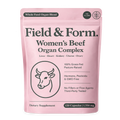
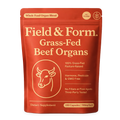
When we built our organ complex, B12 was one of the primary nutritional justifications for including beef liver and kidney. Not as a checkbox, but because the data on B12 form and absorption is clear enough that sourcing whole-food B12 in its active methylcobalamin and adenosylcobalamin forms made obvious sense. The argument for cyanocobalamin supplements, beyond cost, is weak.
We didn't want to build a product that looks impressive on a label but delivers less than a whole-food approach would. Freeze-dried organ tissue preserves the B12 in the form the animal accumulated it, which is the form human physiology evolved to use. Nothing is added. No synthetic B12 is used to fortify the capsule. The dose you get is the dose the organ contains, in the structure it naturally exists in.
For most people eating a modern diet, B12 intake from food is lower than it should be, and the synthetic forms in multivitamins are covering for a dietary gap rather than solving it well. Whole-food organ supplementation addresses the actual source of the gap.
If you're interested in how B12 works alongside the other nutrients in a complete organ complex, our piece on beef kidney covers the mineral profile in more detail, including selenium and DAO alongside its B12 content. Our article on whole food vs synthetic vitamins covers the broader argument for food-form nutrients across the spectrum.
Last updated: 5 April 2026
Ready to feel the difference?
Five grass-fed organs. Freeze-dried. No fillers. 30-day supply.
Shop Beef Organ Complex