
Beef Liver: The Original Superfood (And Why You Need It)
Before multivitamins existed, before protein powders lined supermarket shelves, before anyone had heard of a superfood, people ate liver.
Every traditional culture across the world prized it. Hunters gave it to the sick and the pregnant. Mothers fed it to children. Farmers ate it fresh from the kill. Liver wasn't just food — it was medicine, and they knew it without ever reading a nutritional label.
Somewhere along the way, we stopped. Liver disappeared from British dinner tables. Now it's sold for 50p a pack at the butcher's while everything around it costs ten times more. The most nutrient-dense food on the planet has become the one nobody wants.
That's changing. And for good reason.
What Makes Beef Liver So Remarkable?
Liver is not just another source of protein. It is, gram for gram, the most concentrated source of essential nutrients that exists in the natural food supply. Nothing else comes close.
A single 100g serving of grass-fed beef liver contains approximately:
- Vitamin B12: 3,460% of the recommended daily intake
- Copper: 730% of the recommended daily intake
- Retinol (true Vitamin A): 500–600% of the recommended daily intake
- Folate: 65% of the recommended daily intake
- Riboflavin (B2): 263% of the recommended daily intake
- Iron (haem iron): Around 35% of the recommended daily intake
- Zinc: 35% of the recommended daily intake
- Selenium: 47% of the recommended daily intake
- Choline: Approximately 430mg (critical for brain and liver function)
- CoQ10: Meaningful amounts that support cellular energy production
No plant food, no synthetic supplement, and no muscle meat comes close to this profile in a single serving.
The Nutrients That Actually Matter
Vitamin B12 — The Energy Vitamin Most People Are Short On
B12 deficiency is one of the most common nutrient deficiencies in the UK, even among meat-eaters who don't eat organ meats. It affects red blood cell production, nerve function, and brain health. Fatigue, brain fog, tingling in the hands and feet, and mood changes are all early signs that your B12 is low.
Beef liver contains more B12 per gram than almost any other food on earth. More importantly, it's in the form the body actually uses — methylcobalamin — not the cheaper, less bioavailable cyanocobalamin found in most supplements.
Retinol — The Real Vitamin A
Here's something most people don't know: beta-carotene (the stuff in carrots and sweet potatoes) is not the same as Vitamin A. Your body has to convert it, and the conversion rate is poor — some people barely convert it at all.
Retinol is preformed Vitamin A, and beef liver is the richest dietary source of it. It's essential for immune function, skin health, vision, reproductive health, and foetal development. The fat-soluble vitamins — A, D, E, and K2 — work together, and getting retinol from food (rather than synthetic supplements) provides it in the form the body recognises and uses best.
Copper — The Forgotten Mineral
Copper is one of the most under-discussed essential minerals, and deficiency is surprisingly common. It works alongside iron for energy production, supports the immune system, and plays a role in collagen formation and bone health.
Beef liver is the single best dietary source of copper by a significant margin. One serving provides more copper than most people get in a week from other foods.
Haem Iron — The Kind Your Body Actually Absorbs
Not all iron is created equal. The iron in plants (non-haem iron) is absorbed at a rate of roughly 2–10%. Haem iron from animal sources absorbs at 15–35%. Liver provides haem iron in a form your body can actually use, which is why it's been used for centuries to treat anaemia — long before iron tablets existed.
Choline — The Most Underrated Essential Nutrient
Most people have never heard of choline, but it's essential for liver function, brain development, cell membrane integrity, and fat metabolism. The richest dietary source is egg yolks — and liver. Most people in the UK are chronically low in it.
Does the "Like Supports Like" Principle Apply?
Traditional cultures often ate specific animal organs to support the same organ in their own bodies. Eat heart for heart strength. Eat kidney for kidney health. Eat liver for liver health.
Modern nutritional science has started to provide some context for why this might make sense. Organ tissues contain peptides, cofactors, and growth factors specific to that tissue type. Liver is rich in compounds that directly support liver function — including glutathione precursors, choline (which actively prevents fatty liver disease), and antioxidant enzymes.
Whether the principle holds universally is still debated, but what's clear is that the nutrient profile of beef liver strongly supports healthy liver function — whatever the mechanism.
Grass-Fed vs. Grain-Fed: Does It Matter for Liver?
Yes — more so than for muscle meat.
The liver is a metabolic organ. Its nutrient content is directly tied to what the animal ate. Grass-fed beef liver consistently shows higher concentrations of:
- Omega-3 fatty acids
- Conjugated linoleic acid (CLA)
- Vitamins E and K2
- Carotenoids
Grain-fed liver still provides substantial nutrition, but grass-fed from well-raised animals gives you the full profile. Sourcing matters.
"But Isn't Liver Where Toxins Are Stored?"
This is the most common concern people raise, and it's worth addressing directly.
The liver doesn't store toxins — it processes them. It's a filter, not a bin. What it does store are fat-soluble vitamins (A, D, E, K) and minerals like copper and iron. The nutrient density of liver exists precisely because it's a storage organ for nutrients, not toxins.
That said, sourcing quality matters here too. An animal raised in a stressed, confined environment and fed a poor diet will have a liver that reflects that. A healthy animal on pasture, eating what it evolved to eat, will have a liver full of nutrients. This is why we care so much about where our organs come from.
How Much Liver Do You Actually Need?
The good news is that a little goes a long way. Nutritional recommendations vary, but most experts working in this space suggest:
- Fresh liver: 50–100g, 1–2 times per week
- Desiccated liver supplement: 3–6 capsules daily (typically equivalent to 3–6g of dried liver)
More is not necessarily better. Liver is extremely rich in retinol, and very high doses over extended periods can cause issues. The traditional approach of eating it once or twice a week — not every day in large quantities — is well-supported.
What About the Taste?
Let's not pretend otherwise: beef liver has a strong, distinctive flavour that most modern palates aren't used to. It's an acquired taste, and plenty of people simply never acquire it.
This is where supplements solve a real problem. Desiccated (freeze-dried) beef liver capsules give you the same nutritional profile with none of the taste, none of the cooking, and none of the sourcing effort. You take them like any other supplement.
The key is quality. Not all liver supplements are equal — the sourcing of the raw material, the processing method (freeze-drying vs. heat-drying), and whether the product comes from grass-fed animals all affect the final nutritional content.
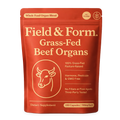
Field & Form Beef Organ Complex
Our Beef Organ Complex includes grass-fed beef liver alongside heart, kidney, spleen, and pancreas — providing the full nose-to-tail nutritional profile in a single daily supplement.
We source from 100% grass-fed British and Irish cattle, freeze-dried to preserve the natural nutrient profile, with no fillers, no flow agents, and no synthetic additions.
The Bottom Line
Beef liver is not a health trend. It's not a biohacking fad. It is the most nutritionally complete food that humans have eaten for most of our existence on this planet, and the evidence for its value hasn't changed — only our willingness to eat it.
Whether you eat it fresh or take it as a supplement, getting liver back into your diet regularly is one of the simplest, most evidence-backed nutritional choices you can make.
All nutritional figures are approximate and based on 100g of raw grass-fed beef liver. Individual products may vary.
Ready to feel the difference?
Five grass-fed organs. Freeze-dried. No fillers. 30-day supply.
Shop Beef Organ Complex